


SHORT ANSWER
First determine the protection function, then the device type.
In selecting a residual current circuit breaker, the question of 'Is it 30 mA or 300 mA?' is not sufficient. Whether the device is RCCB, RCBO or has a relay+toroid structure; the waveform of the residual current it will detect; and the coordination with rated current, number of poles and the overcurrent protection in the system must be considered.
Sigma official RCBO page lists A and AC types with 30 mA and 300 mA options. The Gewiss 90 RCD family offers product groups for different residual current types including AC, A, F and B. Exact product codes and technical values must be verified from the current manufacturer documentation at the time of ordering.
This page is for pre-selection and quotation preparation. The final device type, threshold, coordination and connection layout must be determined by a qualified electrical engineer according to the current project and standards. It must be carried out by a qualified specialist according to the installation manufacturer's schematic.
Visual Separation
With modular device
Separate the relay solution.
Brand and housing shape are not sole selection criteria; the device type and technical values must be verified in the product code.
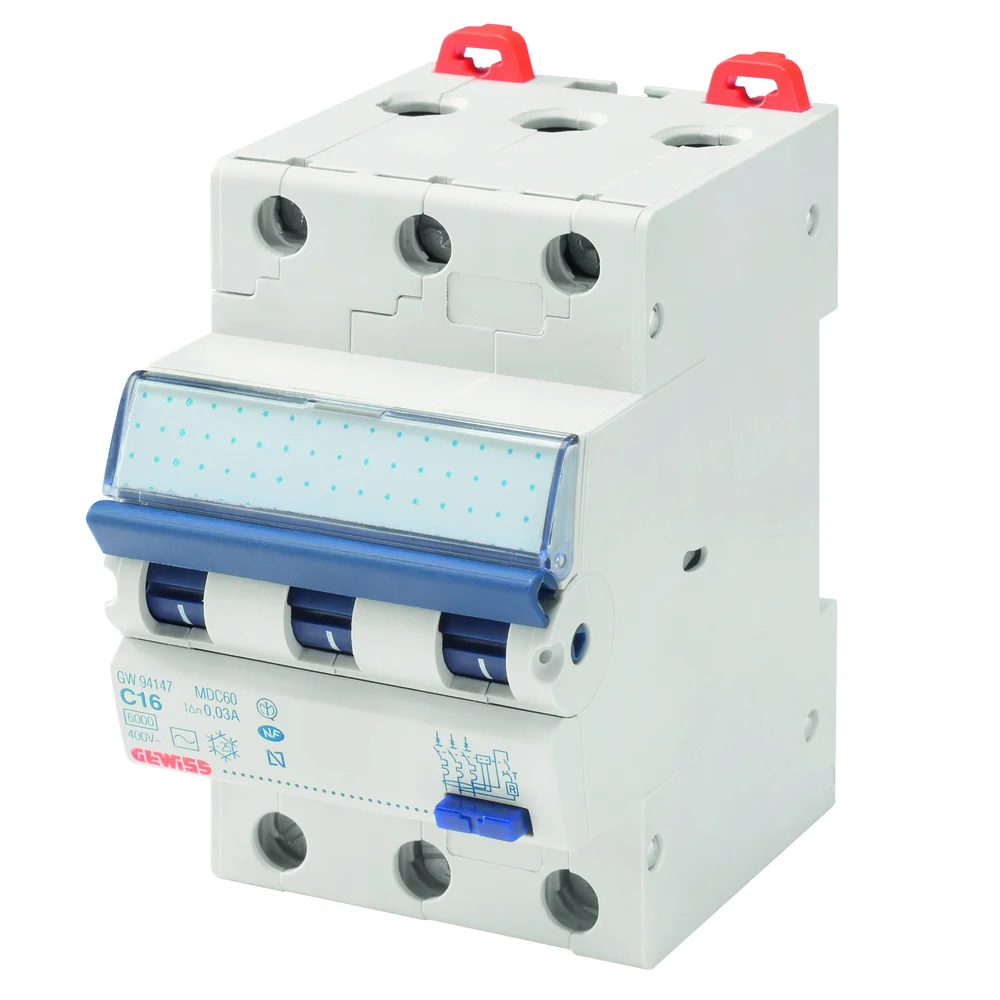 01
01Gewiss 90 RCCB family
A family of modular products featuring different residual current types such as AC, A, F and B.
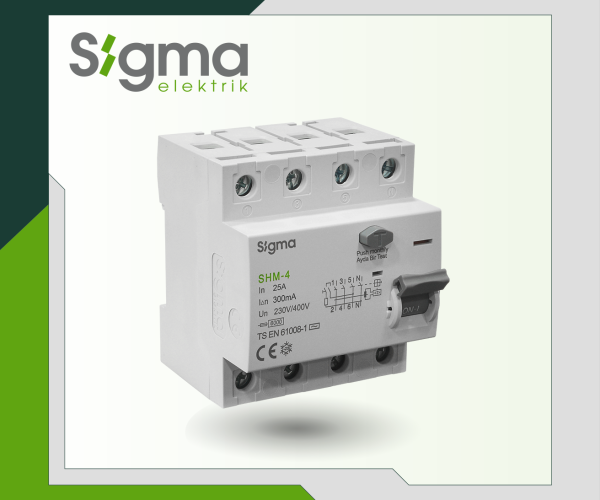 02
02residual current circuit breaker (RCCB)
rated current, pole, residual current type and IΔn values are controlled together.
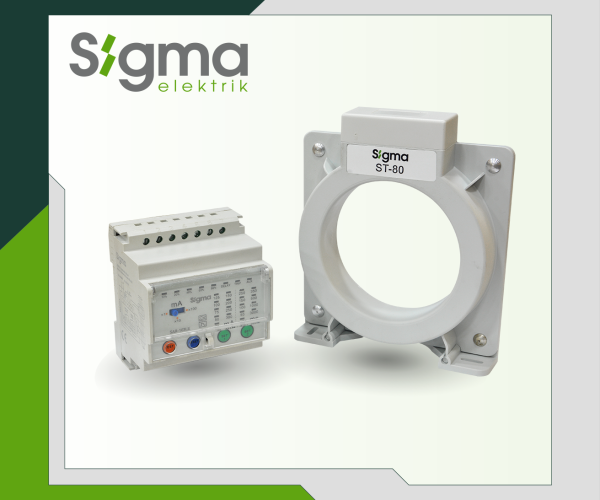 03
03Relay and toroid arrangement
In industrial systems, detection, delay, and tripping circuit are considered together as a project.
DEVICE TYPES
Same name as mentioned
three different solutions.
Writing the required protection function instead of the product name in the quotation reduces incorrect matches.
residual current circuit breaker (RCCB)
Provides residual current protection. Overload and short circuit protection is designed in conjunction with an appropriate separate protective device.
Control:rated current · pole · type · IΔnResidual current device with overcurrent protection
Combines residual current protection with overload and short circuit protection in a single unit.
Control:Current · pole · curve · kA · type · IΔnMonitoring and trip unit
In industrial and larger distribution systems, relay, toroidal current transformer and trip element are considered together as a project.
Control:Threshold · delay · toroid · trip circuitSELECTION CRITERIA
Seven pieces in one
Verify in the product code.
rated current now has different current sensitivity values. The information on the label answers each individual technical question.
| Control | What is determined? | Why is it important? |
|---|---|---|
| 1. Protection function | RCCB, RCBO or relay+toroid solution. | Determines whether overcurrent and short-circuit protection along with residual current protection are provided in the same device. |
| 2. rated current and pole | Line current, phase configuration and neutral switching requirement. | The device ensures compatibility with the circuit and switching arrangement. |
| 3. IΔn | Rated current; the threshold selected according to the purpose of use and project conditions. | Confusing rated current with actual current may lead to incorrect product selection. The exact value must be verified against the relevant project and regulations. |
| 4. Residual Current Type | AC, A, F or B tripping type. | The selection of the appropriate sensing type is ensured in loads containing electronic circuits, inverters, and DC components. |
| 5. Overcurrent data | RCBO for tripping curve and short circuit breaking capacity. | The load characteristics should match the calculated short-circuit level at the installation point. |
| 6. GEWISS DATA OUTLET AND NETWORK CONNECTIVITY SELECTION | Upper-lower protection arrangement, delay or impact resistance options. | Helps isolate the fault to the narrowest possible section and reduces unnecessary tripping. |
| 7. Conditions and Documentation | Temperature, installation, accessory, standard and product code data sheet. | Even though the series name may be similar, it ensures the correct model is verified for the technical scope. |
RESIDUAL CURRENT TYPES
AC, A, F and B
does not describe the same load.
The following summary simplifies the waveform discrimination described in the Gewiss 90 RCD official series explanation. The exact application must be confirmed from the manufacturer's technical table.
Sinusoidal AC
The type defined for applications where sinusoidal alternating residual current is involved.
AC + Pulsed DC
Type considering variable unidirectional, pulsed components that can be generated by electronic devices.
Variable frequency
Type for variable frequency residual currents that may arise from inverters.
DC component
Type for applications where evaluation of DC components is also required.
APPLICATION FLOW
From the offer to the exact code, four steps.
- 01
Collect circuit and load information
System voltage, phase configuration, load type, rated current, panel position and single line diagram if applicable.
- 02
Separate protection scope
Determine whether you need only residual current functionality, combined overload protection, or the relay+toroid solution.
- 03
Verify type and coordination
Compare the load's electronic/inverter structure, upper-lower protection arrangement and service continuity requirement with the manufacturer's data.
- 04
Product code and document match
Pole, In, IΔn, type, breaking capacity and accessories are in the same updated product code.
COMMON MISTAKES
Similar terms,
different protection functions.
Before providing the product code, check the function, type and technical values separately.
RCCB to be considered as overcurrent protection
RCCB is selected, the circuit's overload and short circuit protection must also be verified.
Confusing In with IΔn
The rated current in amperes and the rated residual operating current in milliamperes are different technical values.
Selecting the type without seeing the load structure
Electronic circuit, driver and inverters can affect the appropriate overload current type.
Make a decision based on a single label
Selection, environment, breaking capacity, connection and accessories should be examined together with the updated product data sheet.
Assume equipment failure only when unnecessary tripping occurs
Total leakage, circuit distribution, load behavior and installation conditions should be evaluated within the scope of the project.
Corporate document listing product certificate
ISO management system certificate and conformity or test certificate for a specific product code are not within the same scope.
FREQUENTLY ASKED QUESTIONS
Pre-quotation short answers.
RCCB provides overload and short circuit protection?
RCCB focuses on residual current protection function. Overload and short circuit protection should also be designed. RCBO integrates these functions into a single device with residual current protection.
What is RCBO?
RCBO, residual current circuit breaker (RCCB) is a protective element that combines overload and short circuit protection with residual current protection in the same device. The exact model is selected based on current, pole number, tripping curve, breaking capacity, type and sensitivity information.
What is the difference between AC, A, F and B types?
Types indicate the waveform shapes of residual currents that the device is designed to detect. The selection of the appropriate type should be made according to the manufacturer's current technical documentation, taking into account electronic circuits, inverters and DC components in the load.
What does IΔn mean?
IΔn is the rated residual operating current of the device. This value should not be confused with the rated current of the device; it should be evaluated together with the purpose of use and the applicable project conditions.
What information should I send for the quotation?
Application type, system voltage, phase configuration, rated current, number of poles, desired device type, IΔn, load characteristics, quantity and if applicable existing product code, along with a single-line diagram.
UNVERIFIED SOURCES
Sigma and Gewiss official technical sources.
Series and technical values may be updated. Use the official sources linked for the latest product selection and documentation request.